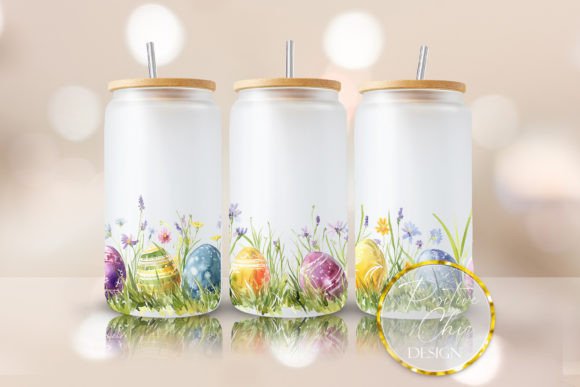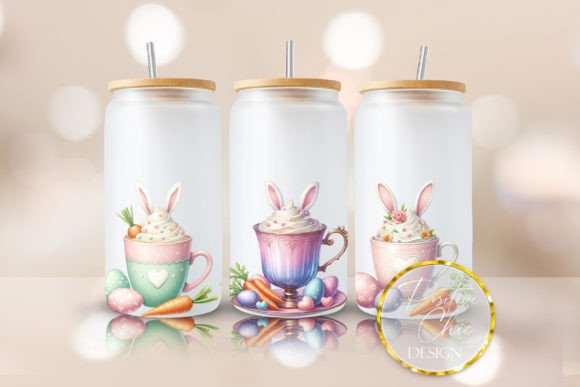
Easter Glass Tumbler Design 16oz Tumbler
Let’s be honest: Easter embroidery designs fall into two camps — the overly sweet, cutesy motifs that look charming on screen but stitch like a tangled mess, and the clean, intentional ones that hold up beautifully on real fabric, in real projects, for real customers. The Easter Glass Tumbler Design 16oz Tumbler lands firmly in the second group — not because it’s flashy, but because it’s thoughtfully composed for translation from digital file to stitched reality.
A First Look That Feels Like a Conversation, Not a Sales Pitch
Opening this machine embroidery design, I didn’t see “Easter” first — I saw rhythm. The layout wraps naturally around a vertical axis, with balanced spacing between eggs, bunnies, and subtle botanical flourishes. There’s no visual shouting. No overcrowded corners or forced symmetry. It breathes. That matters — especially if you’re stitching it onto a curved surface like a tote bag gusset or the front panel of a baby romper. As a designer who’s spent years tweaking hoop placements for boutique clients, I appreciate how this digital embroidery file respects negative space. It doesn’t beg for embellishment; it invites thoughtful placement.
Where It Shines (and Where It Asks for Your Attention)
I tested the Easter Glass Tumbler Design 16oz Tumbler across three real-world scenarios: a linen tea towel for a local gift shop, a cotton-blend sweatshirt for a small-batch holiday pop-up, and a set of embroidered patches for an Etsy seller launching an Easter-themed craft kit. Here’s what stood out:
- On medium-weight woven fabrics — like twill, quilting cotton, or midweight linen — the satin stitch outlines held crisp definition, and the fill stitch areas remained smooth without puckering. Perfect for tote bag design, apron embroidery, or kitchen towel applications where texture meets function.
- For baby embroidery, the scale worked beautifully on onesies and burp cloths — not too large to overwhelm, not so delicate that tiny details vanished after washing. The bunny ears and egg shapes are distinct enough for recognition at 4–6 inches, which is ideal for personalized gift appeal.
- As a commercial embroidery asset, it scaled cleanly down to 3.5" wide without losing legibility — crucial when prepping printable mockups for Etsy listings or social media previews. Buyers respond to clarity, not clutter.
But let’s talk honestly about where to pause. This isn’t a one-size-fits-all embroidery file. On highly textured fabrics — think bouclé, heavy terry, or loosely woven burlap — some of the finer line work softened. And while the stitch density feels balanced overall, I’d recommend using a light cutaway stabilizer for stretchy knits or thin fabrics like rayon challis. Don’t skip that step — it’s the difference between a polished finished product and a slightly wavy edge that undermines your handmade product credibility.
What It Adds (Beyond Stitches)
Embroidery isn’t just about thread on fabric — it’s about perception. The Easter Glass Tumbler Design 16oz Tumbler carries a quiet confidence. It reads as curated, not mass-produced. That lifts perceived value instantly — whether you’re pricing a custom sweatshirt embroidery at $48 or listing a digital applique design on your own shop. Customers notice when a motif feels intentional, not imported.
I’ve seen too many craft business owners undercut their own work by pairing strong branding with weakly executed holiday motifs. This design avoids that trap. Its proportions support consistent brand consistency across product lines — imagine it stitched on matching tea towels, pillow covers, and aprons for a spring collection. It also translates well to black-and-white mockups, which helps buyers visualize it on dark fabric before ordering. Always test that contrast. A soft pastel thread on charcoal linen? Gorgeous. The same thread on navy? Less visible. Know your palette.
Practical Designer Notes You’ll Actually Use
Before stitching your first client order or uploading to your Etsy shop, here’s what I do — and what I recommend you do — with the Easter Glass Tumbler Design 16oz Tumbler:
- Run a test on scrap fabric — same weight, same weave, same stabilizer you plan to use. Watch how corners behave and whether any fine stems or whiskers distort.
- Check thread color contrast in natural light and under store lighting. Easter palettes tempt us toward pale yellows and mint greens — but those can fade visually on light backgrounds. Try a warm ivory or soft taupe for unexpected sophistication.
- Review stitch density manually in your editing software. If you see overlapping fill areas or tight clusters near the base of an egg, consider simplifying one layer — especially for commercial embroidery on budget-conscious orders.
- Confirm hoop size compatibility. While the design fits standard 4x4 hoops comfortably, double-check if you need to split it for larger garments or curved surfaces like caps. (Note: This is a Graphics-category digital file — always verify machine format and sizing before digitizing further.)
- Inspect small details at 200% zoom. Are the bunny eyes readable as stitches? Does the grass line read as texture, not noise? If not, adjust underlay or reduce density there.
- Test licensing scope. Since this is marketed as a Crafts asset, confirm whether resale of finished embroidered items is permitted — critical for Etsy sellers and small shop product creators.
Final Thought: A Design That Serves the Maker First
The Easter Glass Tumbler Design 16oz Tumbler doesn’t try to be everything. It doesn’t cram in 12 bunnies, glitter effects, or forced slogans. Instead, it offers restraint, rhythm, and readiness — qualities that make it easy to adapt, scale, and trust. Whether you’re embroidering a single personalized gift for a neighbor or building a full holiday collection for your creative entrepreneur brand, this design supports your intention instead of competing with it. That’s rare. And that’s why it earns space in my working library — not as a seasonal novelty, but as a reliable, quietly capable design asset.