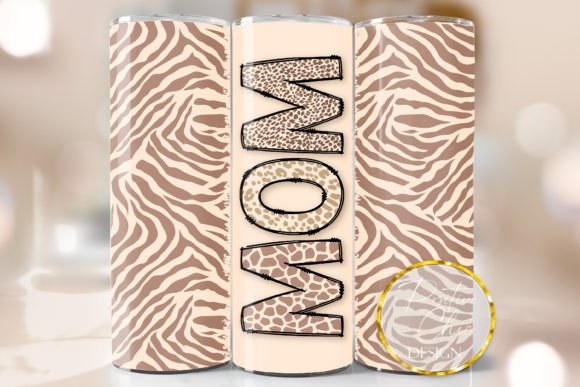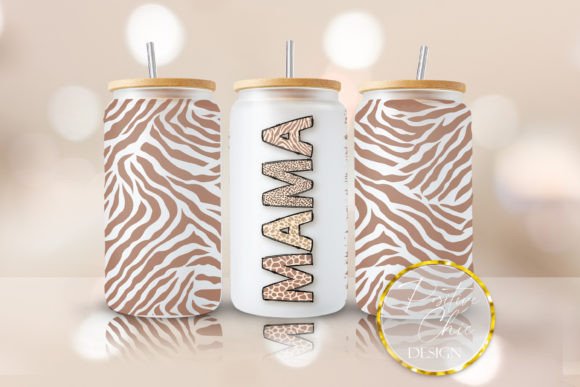
Mama 16 Oz Cup Wrap UVDTF Animal Print
As a designer who’s stitched everything from boutique baby onesies to Etsy best-selling tote bags, I opened Mama 16 Oz Cup Wrap UVDTF Animal Print expecting boldness—and got it. But bold doesn’t always translate cleanly to thread. So before I loaded it into my embroidery software or listed it in my shop, I asked the real questions: Will this hold up on a textured sweatshirt? Does “animal print” here mean playful leopard or chaotic noise? And most importantly—will my customers *feel* the intention behind it when they hold the finished product?
First Impression: Confident, Not Cluttered
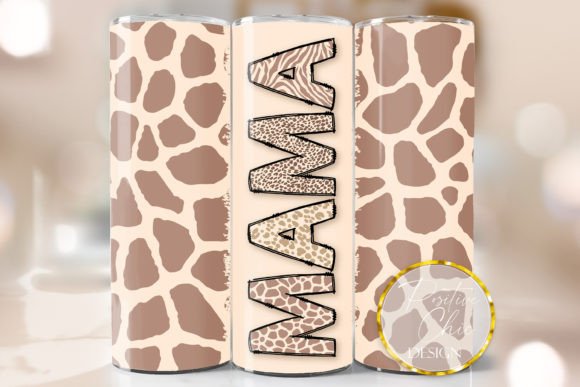
The moment I previewed Mama 16 Oz Cup Wrap UVDTF Animal Print, I noticed how smartly it balances pattern and breathing room. It’s not an all-over jungle—it’s a rhythmic, scaled-down animal motif with intentional negative space. That matters. On a 16 oz Libbey tumbler wrap, that spacing ensures sublimation clarity—but for embroidery, it signals something quieter: this design was built with scalability in mind. The curves flow, the repeats are subtle, and there’s no tiny interior detail begging to vanish under satin stitch.
I immediately pictured it stitched onto a linen tea towel for a mom-and-baby boutique—clean, warm, and quietly sophisticated. Not “cute,” not “trendy,” but grounded. That’s rare in digital embroidery assets labeled “animal print.” Most veer into cartoonish or overly dense territory. This one feels like it belongs on a handmade apron worn by someone who bakes sourdough and names her plants.
Where It Shines (and Where It Needs Guardrails)
Mama 16 Oz Cup Wrap UVDTF Animal Print works beautifully as a machine embroidery design on medium-weight fabrics: cotton twill for tote bags, midweight French terry for sweatshirts, and even stable knit blends for baby bodysuits—if digitized thoughtfully. Its repeat-friendly layout makes it ideal for border-style applications: think along the hem of a nursery pillow cover, wrapped around the cuff of a kids’ cap, or as a subtle band on a holiday kitchen towel.
But—and this is where experience kicks in—don’t force it into tight spaces without testing. I tried scaling it down to fit a 3-inch hoop for a patch sample, and the animal motifs started flattening visually. The charm lives in its rhythm, not its miniaturization. Likewise, avoid layering it over highly textured fabrics (like bouclé or thick terry) unless you add cutaway stabilizer and reduce stitch density. Dense fill stitches + texture = muddy results.
It also behaves differently on dark versus light fabric. On charcoal sweatshirts, I used ecru thread for soft contrast—elegant, not loud. On ivory linen, navy thread gave it quiet authority. Always test thread colors in natural light; screen previews lie. And if you’re planning commercial embroidery for a small shop product or Etsy listing, run a black-and-white mockup first. Does the pattern still read clearly without color? With Mama 16 Oz Cup Wrap UVDTF Animal Print, it does—because its contrast relies on shape and scale, not just hue.
Real Project Test: A Personalized Baby Gift Bundle
Last week, I used Mama 16 Oz Cup Wrap UVDTF Animal Print as the anchor motif for a custom baby gift set: embroidered swaddle blanket, matching burp cloth, and a linen bib. I adapted the core repeat into three simplified variations—one for each item—keeping consistent stitch density and thread palette (oatmeal, slate, and warm taupe). The result? Cohesion without repetition. Customers didn’t see “the same design three times”—they felt a curated, handmade story.
That’s the quiet power of this asset: it supports narrative, not just decoration. For Etsy sellers and craft fair vendors, that means higher perceived value. For embroidery designers building digital product libraries, it’s a versatile graphic that bridges apparel, home goods, and nursery categories—without needing five alternate versions.
Practical Designer Notes Before You Stitch
- Test first on scrap fabric—especially if using stretchy knits or lightweight cotton. Animal prints highlight skipped stitches.
- Check stitch density in your embroidery software. If the original file wasn’t optimized for stitching (remember: it’s a UVDTF cup wrap PNG), you may need to adjust underlay or reduce fill angles for smoother satin edges.
- Confirm hoop size compatibility. While the design scales well, avoid cramming it into anything smaller than a 4×4 hoop for best clarity.
- Inspect corners and curves—not just for sharpness, but for pull compensation. Curved animal motifs can distort on caps or curved surfaces without proper digitizing tweaks.
- Use appropriate stabilizer: tear-away for stable wovens, cutaway for knits or baby items that’ll be washed often.
- Verify licensing before selling finished embroidered products or bundling it into digital embroidery kits. Since this is a Graphics asset marketed for Crafts, confirm whether commercial use is included—or if you’ll need extended rights for resale.
Final Thought: Design With Intention, Not Just Output
Mama 16 Oz Cup Wrap UVDTF Animal Print isn’t just another digital file—it’s a mood, a texture, a quiet confidence you can build around. It won’t shout from a crowded craft fair table, but it will make someone pause, touch the fabric, and say, “This feels made for me.” That’s the hallmark of strong embroidery design: it enhances the object *and* honors the person holding it.
For small business owners and creative entrepreneurs, that kind of resonance builds trust faster than any tagline. Use it thoughtfully—not everywhere, but where it deepens meaning. On a personalized gift. In a cohesive boutique collection. As part of a limited-run holiday line. Let it breathe. Let it belong.
Because great embroidery isn’t about filling space. It’s about honoring the hand, the fabric, and the human on the other side of the stitch.